
Summary:
In today’s global market, quality assurance is everything. It’s the foundation of trust, the key to market access, and the driver of sustainable, competitive trade. This article breaks down the critical roles of certification, traceability, and ethical sourcing, and shows how World Trade Star Inc. builds these frameworks into every shipment to ensure excellence from farm to final delivery.
The Centrality of Quality in Global Agro-Commodity Systems
In today’s market, the definition of product quality has expanded. It now represents legitimacy, regulatory compliance, and social accountability. As supply chains globalize, exporters must prove they meet international standards for safety, sustainability, and ethics. This means quality is no longer just about the product itself, but also about the environmental practices, labor conditions, and operational transparency behind it.
Quality assurance functions as a governance system that blends technical precision with ethical and policy imperatives. Companies that adopt global standards help build more ethical trade systems by doing so. For them, quality becomes a universal credential, a strategic advantage, and protection against market and regulatory shifts.
Certification as the Architecture of Global Legitimacy
Certifications like ISO, HACCP, and Fairtrade form the essential framework for trust in global trade. They go beyond compliance verification to establish the very basis for cross-border accountability. By defining clear metrics for quality, safety, and sustainability, they create a common language that enables regulatory convergence and mutual recognition between trading partners.
At World Trade Star Inc., certification is central to our identity. We partner with accredited global agencies to ensure every export combines agronomic precision, strict regulatory compliance, and environmental stewardship. This commitment covers the entire production cycle, from soil preparation to final shipment. For us, certification is more than a compliance mark; it is a declaration of our integrity and our dedication to continuous improvement.
Traceability as the Foundation of Transparency
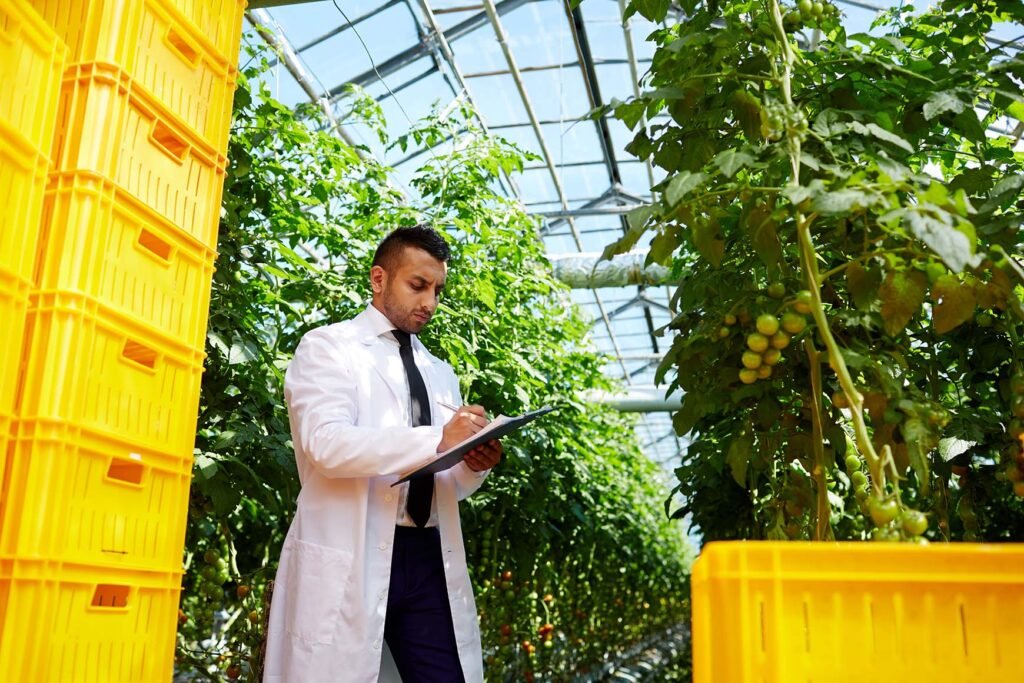
The rise of traceability marks a shift in trade governance from physical inspection to data verification. It allows buyers, regulators, and consumers to verify not just where a product came from, but also the ethical and environmental conditions of its production.
World Trade Star Inc. employs advanced digital systems that integrate blockchain, IoT sensors, and supply-chain analytics. This ensures full traceability from production to shipment. Every consignment is recorded in a secure, immutable system, creating a verifiable story of its journey. This fusion of technology and governance builds transparency, accountability, and confidence. It also generates data that drives innovation and improves operational efficiency, establishing the company as a leader in traceability.
Ethical Trade as a Paradigm of Developmental Equity
Quality in agricultural exports now includes moral and developmental dimensions. Ethical sourcing is not an act of corporate benevolence, but a long-term investment in economic fairness, ecological health, and community resilience. It ensures all stakeholders, from smallholder farmers to end consumers, benefit fairly from the global value chain.
World Trade Star Inc. treats ethical trade as a core business principle. Through fair trade frameworks, equitable pricing, and capacity-building, we advance inclusive and sustainable growth. Our investments in agronomic education, community development, and environmental care demonstrate a commitment to human and ecological well-being. By embedding these values into our operations, we elevate ethical sourcing from a compliance task to a transformative practice.
Innovation, Governance, and the Future of Quality
The future of sustainable agro-exports depends on the relationship between technological innovation and sound governance. Advances in precision agriculture, AI, and climate adaptation are redefining quality assurance. This innovation must be guided by ethics to ensure fair access, clear accountability, and long-term environmental health.
World Trade Star Inc. integrates research, policy dialogue, and stakeholder collaboration to design quality systems that anticipate change. Our partnerships with academia, regulatory bodies, and industry create an evidence-based feedback loop. This convergence of innovation and ethics models a forward-looking approach to trade, where technological progress and environmental stewardship go hand in hand.
Envisioning a Sustainable Future for Agro-Commodity Exports
The next frontier of agricultural trade will be defined by how well companies combine innovation, sustainability, and ethical governance. Leaders will be those who treat quality as a dynamic philosophy, integrating scientific precision, moral accountability, and resilience. Certification, traceability, and ethical sourcing will remain the interdependent pillars supporting the future of exports.
At World Trade Star Inc., this vision guides every decision and shipment. Each export is both an economic achievement and an ethical statement, representing excellence, transparency, and human dignity. By making quality a comprehensive principle of action, we not only meet global expectations but also help redefine the standards for sustainable trade.